

Clinical governance ensures we deliver safe, effective and high quality care while continually improving the experience of every patient.
The care quality commission states that clinical governance is a systematic approach to maintaining and improving the quality of patient care. It provides a framework for drawing together the different strands of quality improvement which includes clinical audit, clinical leadership, evidence-based practice and the dissemination of good practice, ideas and innovation and addressing poor clinical performance.
All healthcare providers should give clinical governance a high priority. It should be led by senior members of the practice who understand their responsibilities to improve the quality-of-care patients receive and are accountable for the quality of clinical practice provided by clinicians in the practice. All staff members should be involved.
As part of these arrangements our principles and processes are underpinned by the 7 pillars of clinical governance.
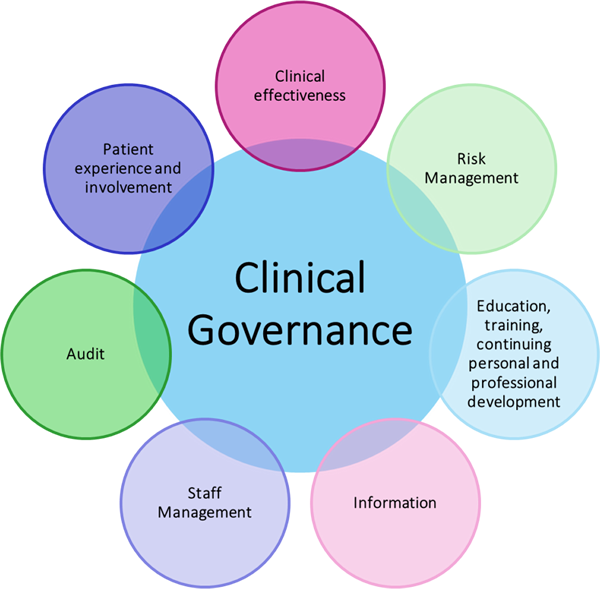
Patient-centred care is the cornerstone of clinical governance. This pillar stresses the importance of involving patients in decision-making processes, respecting their preferences, and promoting effective communication between healthcare providers and patients. By adopting a patient’s perspective, we can tailor their services to meet patient needs and enhance the overall quality of care.
Clinical effectiveness is focused on providing evidence-based care that leads to positive outcomes. This involves applying best practices, tracking treatment results, and continuously evaluating clinical processes. By integrating the latest research and medical advancements into daily practices, we can ensure that its services are both current and effective in improving patient health.
Strong leadership and governance are essential for the success of clinical governance within our organisation. This pillar focuses on establishing clear lines of responsibility, promoting leadership development, and ensuring that the organisational structure supports the delivery of high-quality care.
Strong leadership and governance are essential for the success of clinical governance within our organisation. This pillar focuses on establishing clear lines of responsibility, promoting leadership development, and ensuring that the organisational structure supports the delivery of high-quality care.
The final pillar of clinical governance involves establishing mechanisms for performance monitoring and quality and improvement. Regular audits, reviews, and evaluations allow us to assess their performance against established standards. By identifying areas of strength and areas needing improvement, we implement targeted strategies to enhance the overall quality of care.
Connect with qualified specialists through our quick and streamlined online or face-to-face assessment process. Experience the perfect blend of expertise and convenience.